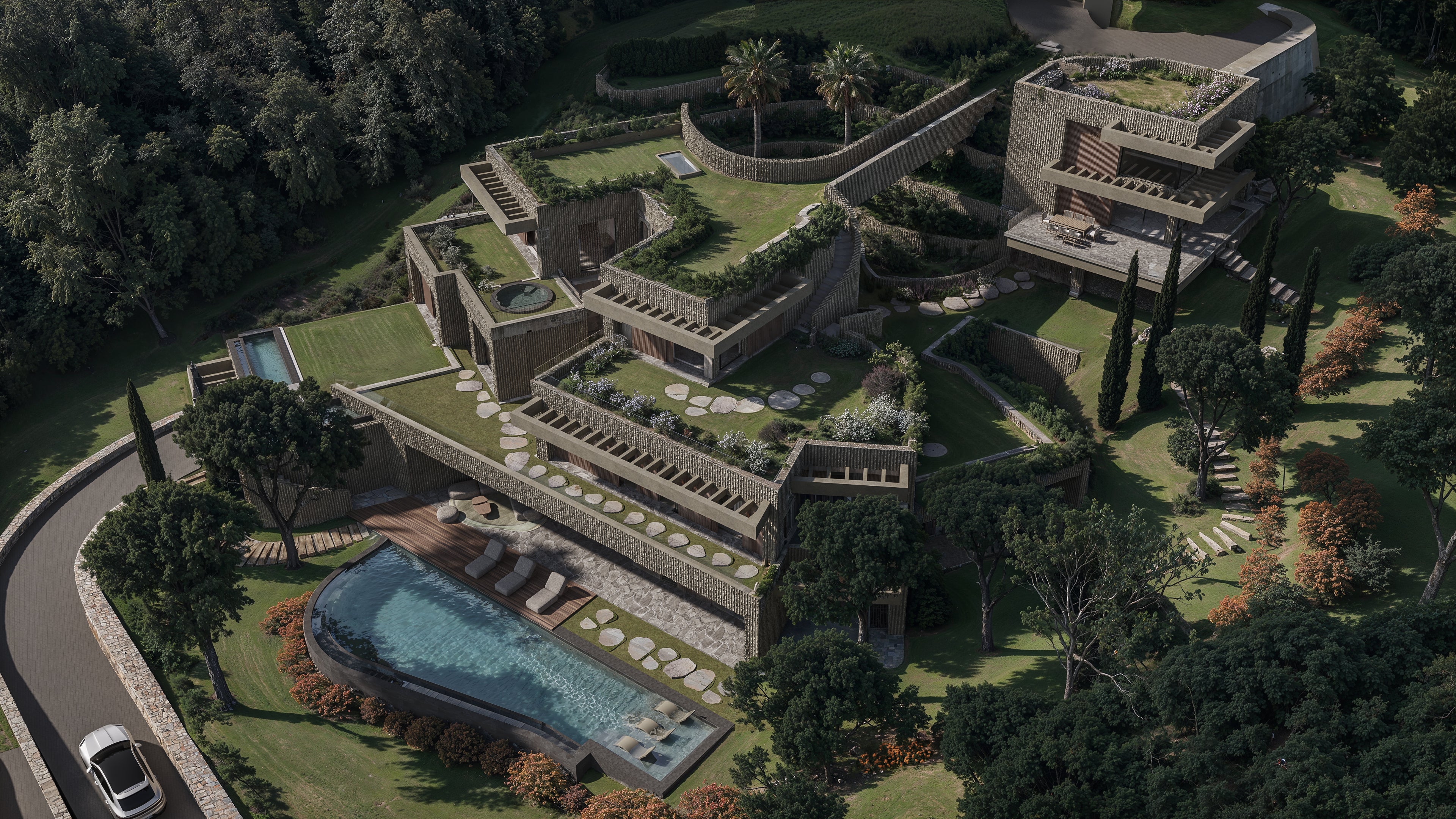
We spoke with Chema Sobrado, co-founder of Archidom Studio, a firm founded in Marbella and now with an international presence. We discussed its beginnings, its architectural philosophy, and the importance of collaborating with partners who elevate each project, such as Gunni & Trentino.
Tell us about the beginnings of your studio. Your collaboration is notable for its harmony and lack of ego conflicts. What is the key to this creative synergy and how does it impact your projects?
Archidom Studio was born from the union of two professionals with great enthusiasm and a desire to conquer the world.
We had the opportunity to collaborate on an iconic project in Marbella, "Momento", and that was the true starting point. Thanks to Marbella, we grew immensely and were able to open up to the international scene: Archidom Madrid, soon Archidom Dubai, as well as projects in Morocco, China, and the Dominican Republic.
As in any creative profession, you start with small projects—a "small apartment"—and over time you get to develop 1,500 m² villas. That evolution, always accompanied by clients looking for something different, has been key to the studio's success.

You have mentioned on several occasions the need for a promoter and the balance between creativity and business. How do you manage to combine your artistic vision with commercial viability?
In architecture, no one is going to call you to design an opera house if you haven't designed a small theater first.
Every project is a learning experience and a step forward. This balance between vision and reality happens naturally: growing with the client, understanding their needs, and translating them into something functional, operational, and viable.
From your perspective, what is the true role of an architect? How do you understand your responsibility in creating spaces and communities?
The architect's mission is to listen. Some clients know exactly what they want; others only have a dream or an aspiration. Our job is to turn that dream into reality, always adhering to criteria of functionality, dimensions, and operability.
Architecture is, in essence, making it easier for people to live better.
Having worked in places as diverse as Argentina, Vietnam, Sweden, Morocco, and China, how have these experiences influenced your architectural approach?
Working abroad opens your mind. Sometimes it's very interesting to bring ideas and architectural approaches from other countries to different contexts. For example, a client obsessed with Bali asked us to have their villa reflect those memories and sensations, but always adapted to the local environment. That dialogue between cultures is very enriching.
Lighting is another element that helps define spaces; how do you take it into account? What importance does it have in your projects?
Lighting has a key importance in architecture, both in the form of natural light, which is part of its essence, and through artificial lighting. Without them, nothing would be seen, and aspects such as definition, nuance, or the creation of atmospheres have a lot to do with light.
What kind of projects excite you the most? Is there a particular type of development or social initiative that you feel a special passion for?
What excites us most are projects where the client wants to break away from the usual, where they are looking for something different. These are the commissions that truly allow architecture to evolve and set new benchmarks.
A la hora de abordar un proyecto, ¿qué beneficios te aporta Gunni & Trentino?
Working with Gunni & Trentino makes the process much easier for us.
In a world where clients arrive with a Pinterest board full of ideas, what they really need is to touch the materials. When that's not possible, processes drag on.
With a visit to the Gunni & Trentino showroom, many decisions that could take months are resolved in a matter of hours.
Gunni & Trentino Showroom: What would you highlight as the key features of the showroom?
What they have achieved is very difficult: A showroom prepared for both architects and clients.
For us, it's essential to have all the materials visible—faucets, porcelain tiles, textures—and at the same time, inspiring environments. At Gunni & Trentino, everything is within reach and well organized. They have made it very easy.
Tell us about your latest collaborations. Which project would you highlight? Why?
We are working together on a very exciting residential project.
The client arrived with renders of spectacular houses—the typical magazine mansions—to tell us: "This is what I don't want." That opened the door for us to explore something new. We believe this project will mark a before and after in residential architecture in Marbella and Spain.
To conclude, is there any architectural project or concept that you haven't had the opportunity to materialize yet, but would like to bring to fruition in the future?
The dream is to continue tackling projects that break away from the conventional, proposals that allow us to explore new ways of living and new architectural languages.
That is always the driving force: to continue growing with each challenge.