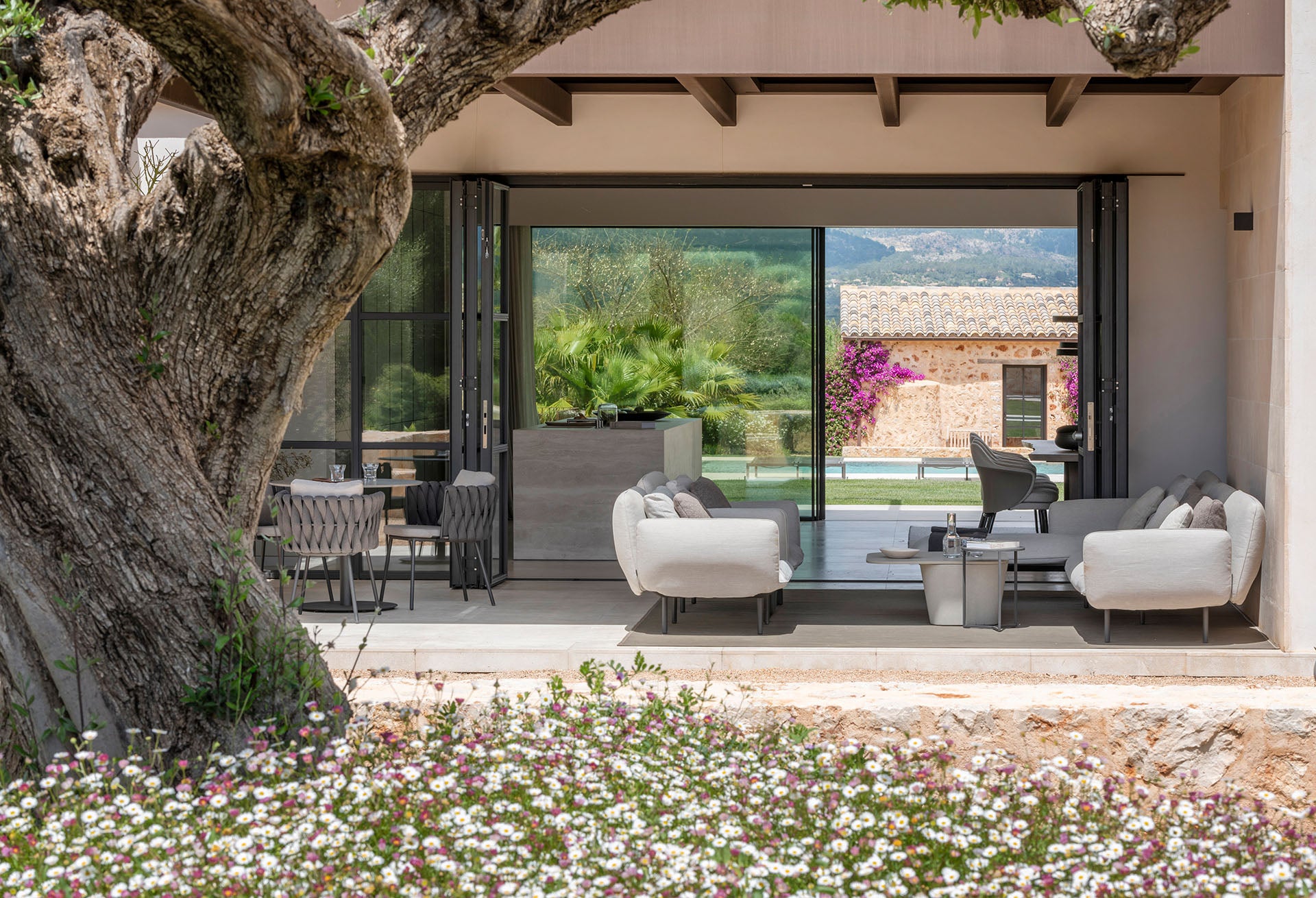
With an established track record in the high-end real estate sector, Hans Lenz, Managing Director of Engel & Völkers Southwest Mallorca, has witnessed the evolution of the island’s premium residential market for many years. From his unique vantage point, he closely observes Mallorca’s emergence as one of Europe’s most attractive residential destinations and reflects on the changes redefining the concept of residential luxury.
From your perspective, how would you define the concept of residential luxury today, and how has it evolved in recent years?
Residential luxury is the result of an evolution that has unfolded over decades. In Mallorca, especially in the southwest of the island, this process has been shaped by the consolidation of a highly professionalized market where developers, architects, interior designers, and specialist advisors work together in a highly coordinated manner. Today, luxury is defined not only by location or the quality of finishes, but by the overall quality of the project and its ability to meet the expectations of an increasingly international clientele.

Mallorca has evolved from a seasonal destination into a permanent home for international residents. What changes have you observed in buyer behaviour?
Buyer expectations have always been high, but the typical buyer profile has changed. Years ago, the market was dominated by people looking to retire; today, we see an increasing number of young buyers who work remotely and seek year-round quality of life. Mallorca offers comprehensive infrastructure—international education, healthcare, marinas, and a vibrant cultural scene—that makes it possible to live here permanently in a cosmopolitan and welcoming environment.
In a well-established market such as the Balearic Islands, what factors make a project stand out from other premium developments?
The difference usually lies in the project’s consistency from its earliest stages. It is increasingly common for design, architecture, interior design, and market positioning to be integrated from the outset. This holistic approach makes it possible to develop projects with their own identity and a clear value proposition in a highly competitive market.
In high-end projects, coordination between the developer, architects, interior designers, and strategic partners is key. What role does the real estate company play in that process?
More than a real estate agency, we act as advisors who connect all parties involved in the project. With companies like Terraza Balear, there is a collaborative relationship built over many years, which facilitates very fluid communication between developers, designers, and advisors. That coordination is essential to develop coherent and well-positioned projects.
The international client is increasingly informed and seeks homes that reflect their lifestyle. How does this influence the definition of the product?
Today, the client wants to see themselves reflected in their home. There are clear trends—such as the return to a more Mediterranean architecture, with natural materials or traditional elements—but what really matters is that the project allows for a certain degree of customization. Each home must be able to adapt to the identity and lifestyle of the person who lives in it.
Many projects prioritize visual impact, but not always long-term functionality. What aspects really make the difference in a home designed for year-round living?
A good home is one today and will continue to be one many years from now. When the layout is logical and the construction quality is high, that quality is immediately noticeable. Technology is also part of the project, but it must be integrated thoughtfully. Today, aspects such as energy efficiency, sustainability, and the environmental quality of spaces are also becoming increasingly important.
In a market as strained as the Balearic Islands, where luxury real estate development and the debate over access to housing coexist, how do you see the future of the sector?
It is essential to address the problem of access to housing. For years, growth was not sufficiently planned, and now we are seeing the consequences. It is necessary to find a balance that allows the dynamism of the real estate market to be maintained without losing sight of the need for housing for residents.
You have closely witnessed the evolution of Terraza Balear and its integration into the Gunni & Trentino group. What value does this union bring to the ecosystem of premium projects in Mallorca?
At Engel & Völkers, we have been linked to Terraza Balear practically since its beginnings. The integration with Gunni & Trentino opens new opportunities, especially thanks to the group's presence on the mainland and its expertise in areas such as contract work and kitchen development. This union expands the possibilities for collaboration on high-level projects.

Engel & Völkers has collaborated with the group on various projects where coordination between sales, interior design, and international brands has been key. What does it bring to integrate a partner capable of offering a comprehensive service?
It still happens that in some projects interior design is incorporated too late. When integrated from the beginning, it brings coherence between architecture, materials, and atmosphere. Having a solid partner who can develop that vision and execute it correctly provides security to both the developer and the final client.
In addition to your professional activity, you participate in initiatives linked to the care of the environment such as Mallorca Preservation Foundation. How did this project arise?
Mallorca Preservation is a foundation that supports environmental projects on the island, from marine conservation to sustainable agriculture. It stems from a very simple idea: those of us who live on an island have a special responsibility towards our environment. The foundation acts as a platform to channel donations and support initiatives that contribute to preserving the territory.
Finally, what legacy would you like to leave in the real estate sector?
I would like the legacy to be a way of working based on respect, honesty, and commitment to the client. This is a job that requires a lot of dedication and, if that way of understanding the profession can be transmitted to the team and maintained over time, then it will have been worth it.