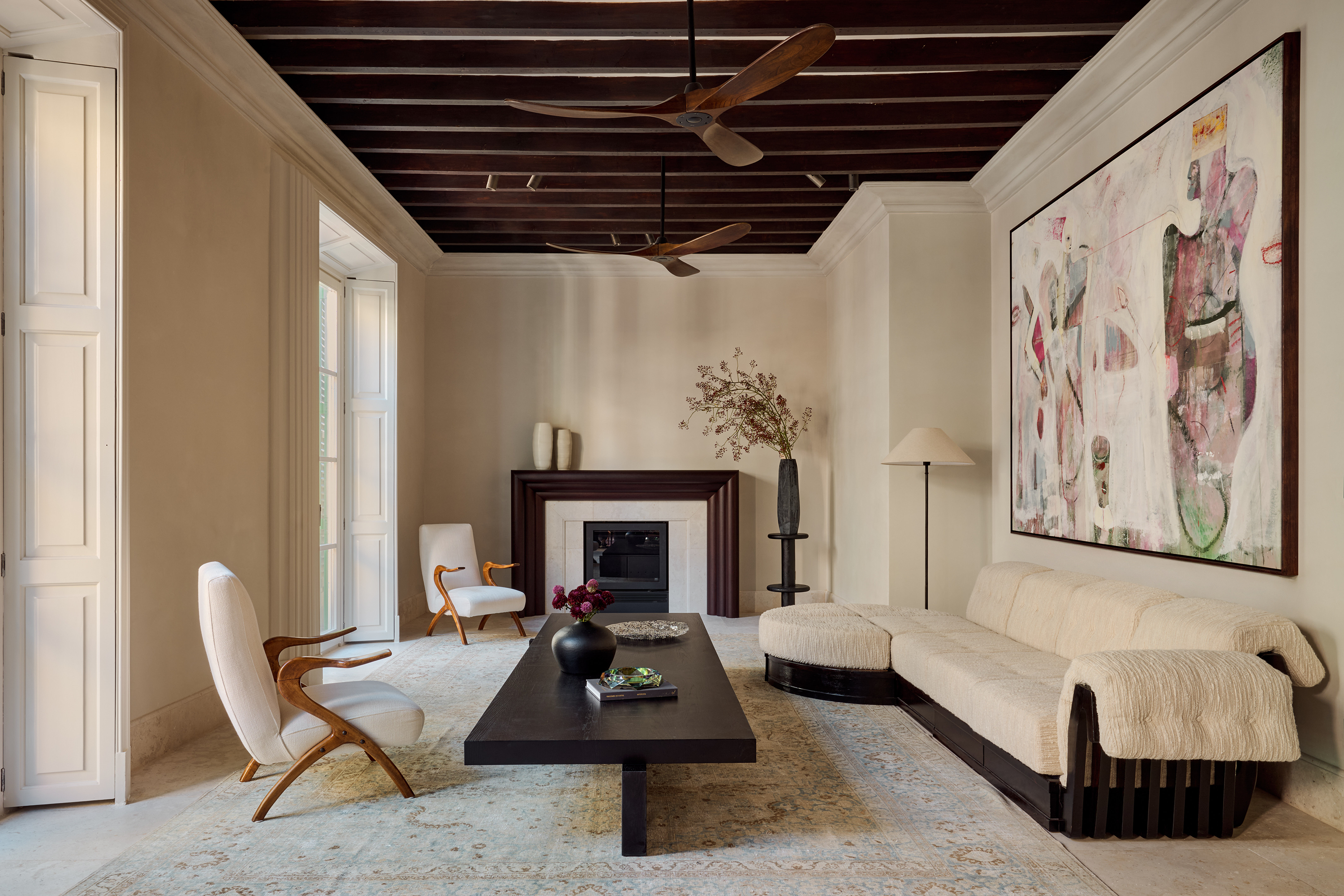
With a practice defined by the integration of architecture and interior design, Sergio Olazábal develops residential projects in which materiality, the human touch, and artisan craftsmanship converse with precise technical execution. His approach is based on conceiving each space as a coherent whole, where materials, light, and detail construct timeless atmospheres, designed to be lived in and to endure over time. A way of understanding design that finds in collaboration with partners like Gunni & Trentino a natural ally to elevate each project to the highest level of exigency.
You come from a "classical" architectural background, but you say that interior design has completely absorbed you. When did that turning point occur and what made you look at projects from a different perspective?
For years I worked in a large, highly structured architectural firm, where everything was precisely modulated and projects, both conceptual and executive, were very comprehensive and complex. Our own firm initially adopted the same approach. Over time, we began to specialize in building rehabilitation, and that's when the real turning point occurred. We understood that, in addition to a solid technical project – capable of even intervening in the structure when necessary – it was essential to incorporate an interior layer that would add character. Interior design allowed us to work without fear of color, darkness, patinas, or movement on walls and ceilings, and to give spaces greater emotional depth.

You argue that interior design
can radically transform
an architectural project. How does your design approach change when that interior dimension is incorporated from the outset?
For us, there is no real boundary between architecture and interior design. We do not conceive of the project in layers or work with independent designers. Everything is approached holistically from the very beginning. This global vision allows us to build a coherent narrative, where technical, spatial, and aesthetic decisions are part of the same discourse.
Deep colors, textures, natural materials, and handcrafted techniques are common in your work. How would you define this material language, and what role do artisans play in the final result?
We are not afraid to mix things up. We work with many pieces from antique dealers, custom-designed elements with a handcrafted character, and at the same time, with very sophisticated 21st-century industrial pieces. We believe that when the design is of quality and well-chosen, it works. We are particularly interested in the human touch. We like to perceive the artisan's pride, to notice that a piece has been hand-carved and is not perfect. That imperfection brings truth and balance to the space, and generates a harmony that is difficult to achieve from purely industrial elements.
Furniture, lighting, and textiles play a very important role in your projects. How do you build harmony between these elements?
The key is to understand them as part of a whole, never as isolated elements. We seek for spaces to have weight, presence, and coherence. The combination of pieces, materials, and light must convey solidity and a certain sense of permanence, as if the space had always existed that way.
You are interested in the "human touch"
and the beauty of imperfection,
but at the same time you value very precise
industrial counterpoints. How do you balance both worlds?
This balance is achieved through judgment. Industrial precision and artisanal imperfection are not opposed if both respond to the same vision. When integrated with intention, they complement each other and enrich the final result.
When approaching a project, what does collaborating with Gunni & Trentino bring you, and how does their world fit into your way of understanding interior design?
The relationship with Gunni & Trentino has been built over many years. We have been collaborating on numerous projects for nearly two decades, and one of their great strengths is their ability to develop custom solutions. Sometimes, even models of pieces that do not exist in their catalog or showroom are made, pushing together to achieve something truly unique.

In jointly developed projects, how do you approach the integration of architecture and interior design to achieve that "wow factor"?
Gunni & Trentino's experience and professionalism ensure that every decision on site is handled with precision and confidence, guaranteeing that the entire process flows successfully to achieve that final "wow effect." The level of shared involvement among all teams is key to achieving truly differentiating projects.
In your latest collaboration for the same client in Palma and Madrid, what would you highlight from the experience?
These are two unique residential projects, specifically designed for the client. In one of them, for example, it was necessary to retouch the patinas of an already installed kitchen directly on site until the exact tone we were looking for was achieved. It is a demanding process, but we firmly believe that the final result justifies the effort. Unique spaces can only be achieved with truly committed professionals.
If you had to summarize what you are looking for today when designing interiors in a single idea, what would it be? And what legacy would you like to leave?
We believe in design that endures. Beyond whether something is beautiful or not, we are interested in it having substance, that the materials and finishes convey longevity, as if they had always been there. The best possible legacy is that, once a project is finished, the client invites us to spend time with them: a meal, a weekend, to live in the house. To see how they enjoy the spaces and feel that we have contributed, even if only a little, to improving their quality of life. That is, without a doubt, the greatest recognition.